Buffalo Mozzarella vs Cow’s Milk Mozzarella: Discover the Differences

Do you know the main differences between buffalo mozzarella and fiordilatte mozzarella? Today, Caseificio Nobili will reveal them all to you. Buffalo Mozzarella: Intense Flavor, Creamy Texture Buffalo mozzarella, with its ancient and authentic origin, offers a unique and unmistakable taste rooted in Italian dairy tradition. Made from buffalo milk, this mozzarella is distinguished by its slightly more intense and rich flavor, ranging from notes of fresh milk to hints of butter and cream. The soft and creamy texture, combined with its ability to melt in the mouth, makes buffalo mozzarella a sensory experience not to be missed. The trick is not to pair it with foods that overly contrast its flavor, as buffalo mozzarella already has a very full-bodied taste on its own. Cow’s Milk Mozzarella: Delicacy in Flavor and Texture Cow’s milk mozzarella, made with cow’s milk, enchants with its delicate sweetness and soft and velvety texture. Its slightly more delicate taste compared to buffalo mozzarella makes it a versatile choice suitable for various preparations, from dressing fresh salads to adding to hot dishes like pizza and pasta. Cow’s milk mozzarella stands out for its adaptability and ability to blend perfectly with other flavors, adding a touch of creaminess to every dish. Comparison: Flavor, Texture, and Culinary Use Although both mozzarella variants are appreciated for their unique characteristics, the comparison between buffalo mozzarella and cow’s milk mozzarella highlights interesting differences. While buffalo mozzarella is distinguished by its more intense flavor and its ability to be enjoyed on its own or with a simple dressing of oil and fresh basil, cow’s milk mozzarella perfectly adapts to a wide range of recipes, ensuring an enveloping creaminess without overpowering the other flavors in the dishes. Both variants are a symbol of Italian dairy mastery and can be appreciated in various gastronomic contexts.
Pumpkin burger with radicchio and scamorza

Who says a sandwich can’t be a healthy and satisfying meal? Perhaps they have never tried this spectacular pumpkin burger with scamorza and radicchio. INGREDIENTS 4 sandwiches (if you find bread with pumpkin seeds, that would be great) 1 kg of Butternut squash 300g of red radicchio 150g of scamorza 1 orange 1 tablespoon of acacia honey Sage and rosemary Oil, salt, and pepper, Mayonnaise to taste PREPARATION To start, slice the Butternut squash thinly and season it with oil, salt, pepper, sage, and rosemary. Bake it in the oven until soft and slightly golden. Meanwhile, slice the radicchio into thin strips and caramelize it in a pan with the juice of an orange and a tablespoon of acacia honey, until soft and slightly crispy. Once the squash and radicchio are ready, assemble your Burger. Spread some mayonnaise on the bread and heat it on the grill, then add a bed of caramelized radicchio, the grilled squash, and a generous slice of scamorza from Caseificio Nobili. Now it’s time to savor this Pumpkin burger with scamorza and radicchio, a true explosion of flavor that fully celebrates autumn and its rich spectrum of tastes.
Pasta with Ricotta Pesto
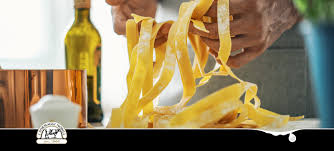
In the world of Italian cuisine, the combination of pasta and ricotta creates an extraordinary gastronomic experience. Today, we present a delicious recipe for “Pasta with Ricotta Pesto” that showcases the rich and creamy flavor of our fresh ricotta. INGREDIENTS 350g of pasta (choose your favorite) 200g of fresh Nobili ricotta 1 cup of fresh basil leaves 1/4 cup of pine nuts 2 cloves of garlic 1/2 cup of extra virgin olive oil 1/2 cup of grated Parmigiano Reggiano Salt and freshly ground black pepper to taste PREPARATION Start by preparing the ricotta pesto. In a blender, combine the fresh ricotta, fresh basil, pine nuts, garlic, grated Parmigiano Reggiano and a pinch of salt. Blend the ingredients until you achieve a creamy consistency. Gradually add the extra virgin olive oil while blending, until you obtain a smooth and homogeneous pesto. Taste and adjust the salt and pepper to your liking. In a large pot, bring plenty of salted water to a boil. Add the pasta and cook it according to the package instructions until al dente. Remember to stir occasionally to prevent the pasta from sticking. When the pasta is ready, drain it, reserving some of the cooking water (about 1/2 cup) aside. In a large bowl, combine the cooked pasta and the prepared ricotta pesto. Mix well, adding a bit of the pasta cooking water if necessary to achieve a creamy consistency. Ensure that the ricotta pesto is evenly distributed over the pasta. Serve the pasta with ricotta pesto on individual plates, garnishing with a sprinkle of grated Parmigiano Reggiano and a pinch of freshly ground black pepper.
Cannelloni: history and curiosities of a delicious Italian classic
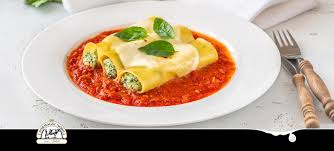
Cannelloni are an Italian dish loved worldwide, but how many truly know the history and fascinating curiosities surrounding them? Let’s discover together seven interesting facts about cannelloni that will make you appreciate this delicious dish even more. 1. Ancient origins: Cannelloni have ancient origins and are deeply rooted in Italian culinary tradition. The term “cannellone” derives from the Italian word “canna,” meaning “tube” or “sugar cane.” Indeed, the cylindrical shape of cannelloni is similar to that of a cane. The earliest historical traces of cannelloni date back to the time of the ancient Romans, who were known for preparing similar pasta dishes. However, the dish as we know it today, with tasty fillings and abundant sauces, has more recent roots. Over the centuries, the cannelloni recipe has evolved in different Italian regions. In Sicily, for example, you can find versions of cannelloni filled with ricotta and spinach, while in Emilia-Romagna, cannelloni filled with meat and béchamel are popular. Today, there are many regional and personal variations of the cannelloni recipe. 2. Regional names: Italy is famous for its diverse regional cuisine, and cannelloni are no exception. In different Italian regions, the dish is known by different names. For example, in Tuscany, they are called “crespelle,” a local variant of cannelloni. In Puglia, however, they are known as “cannelloni di magro.” These regional names reflect the richness of Italian culinary culture. 3. Festive dishes: Cannelloni are often associated with special occasions and holidays. In many Italian families, it is a tradition to serve cannelloni during the Christmas period or on New Year’s Day. This dish thus becomes a festive element that brings families and friends together in moments of joy and celebration. 4. Vegetarian variants: Although traditional cannelloni are usually filled with meat, there are vegetarian variants of the dish that delight vegan and vegetarian palates. These variants include fillings made from fresh spinach, mushrooms, grilled zucchini, and other vegetable delights. These options make cannelloni a flexible dish suitable for different dietary preferences. 5. Celebrities in the kitchen: Cannelloni have also gained recognition in the world of art and cinema. A notable example is the Italian film “La Grande Abbuffata” directed by Marco Ferreri, in which cannelloni play a significant role in the plot. This demonstrates how this dish is an important element of Italian culture and how it can inspire the world of art. 6. Creative fillings: The fillings of cannelloni can be incredibly creative. Many chefs and cooking enthusiasts experiment with unconventional fillings, adding a new dimension to this classic dish. You can find cannelloni with fillings made of smoked salmon, cooked ham, porcini mushrooms, or even seafood like shrimp or squid. This culinary creativity makes cannelloni a palette of flavors to explore. 7. The Art of preparation: Preparing cannelloni is a culinary art that requires care and attention to detail. Filling the pasta tubes without damaging them is a challenge that requires practice and skill. An experienced cook knows how to masterfully handle the delicacy of cannelloni, creating dishes that are beautiful to see and delicious to taste. This process is a demonstration of the love and passion that go into every traditional cannelloni dish.
Pizzaiola Risotto: Cheesy Recipe
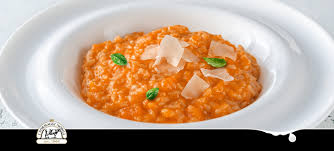
The pizzaiola risotto is perfect for impressing your relatives at a Sunday lunch or any other special occasion. Here’s how to prepare it! INGREDIENTS 300g Arborio rice 1 onion, finely chopped 2 cloves of garlic, minced 400g peeled tomatoes, blended 1 Fiorita, diced 100g grated Parmesan cheese 1 teaspoon dried oregano 1 teaspoon dried basil 1/2 teaspoon red pepper flakes (or more to taste) 1/4 cup red wine 1.2 liters hot vegetable broth Extra virgin olive oil Salt and freshly ground black pepper Fresh basil leaves for garnish PREPARATION Start by heating some olive oil in a large non-stick pan over medium heat. Add the chopped onion and garlic and sauté until they become translucent. Add the Arborio rice to the pan and toast it for a couple of minutes, stirring constantly until it becomes slightly golden. Pour the red wine into the pan and let it evaporate, stirring until the rice has absorbed it. Now, start adding the blended peeled tomatoes gradually, stirring constantly. Continue cooking until the sauce has slightly thickened. Add the oregano, dried basil, and red pepper flakes. Adjust the level of spiciness to your liking. Begin adding the hot vegetable broth, one ladle at a time, stirring constantly and waiting for the liquid to be absorbed before adding more. Continue this process for about 18-20 minutes or until the rice is al dente and creamy. Halfway through cooking the rice, add the mozzarella cubes and stir until they melt into the risotto, giving it creaminess and an irresistible flavor. When the risotto is ready, remove the pan from the heat. Add the grated Parmesan and mix well. Taste and add salt and ground black pepper to your preference. Serve your delicious pizzaiola risotto hot, garnished with fresh basil leaves.
Meatloaf: Swiss chard and scamorza
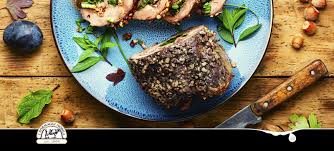
The Swiss chard and scamorza meatloaf is a perfect dish for this month and to celebrate Sunday with family. Here’s the recipe! INGREDIENTS 500g of ground beef 200g of mortadella (single slice) 3 slices of sandwich bread 1 glass of milk 2 eggs Breadcrumbs as needed 1 wedge of scamorza 500g of Swiss chard leaves black pepper salt PREPARATION To prepare the Swiss chard and scamorza meatloaf, start by blanching the Swiss chard, then remove it from the water and let it drain, squeezing it well. In a separate bowl, soak the sandwich bread in milk, then add the eggs and mix everything together. Proceed by mincing the mortadella and mixing it with the ground beef, salt, and pepper. Use breadcrumbs to achieve the right consistency of the mixture. Spread the mixture on a well-oiled sheet of baking paper. Cover the mixture with the Swiss chard and then add some pieces of scamorza, cut into sticks, on the short side. Use the baking paper to wrap the mixture lengthwise to form a sausage, paying attention to seal the mixture well at both ends. Sprinkle sesame seeds over all sides of the meatloaf. Wrap the meatloaf in baking paper, forming a candy shape, then place it in a baking tray at 200°C for 40 minutes. Remove the meatloaf and free it from the baking paper, bake again for another 15 minutes. Let it rest for 10 minutes before serving.
Ricotta and Strawberry Mousse

The summer heat still makes us seek fresh and thirst-quenching foods, which is why today we offer you a sweet and light version to refresh your summer, a strawberry and ricotta mousse with a lively touch of limoncello. INGREDIENTS 200 ml of limoncello 300 g of ricotta 2 egg whites 10 g of gelatin sheets 150 g of powdered sugar 350 g of strawberries Salt to taste Mint to taste PREPARATION Start by cleaning the strawberries with cold water and removing the leaves. Then slice 300g and place them in a bowl to marinate in the fridge for an hour with 150 ml of limoncello and 20 g of powdered sugar. While waiting, soak the gelatin in cold water. In a bowl, combine and mix the ricotta, previously sifted with the remaining powdered sugar, and a bit of sauce created from the marinated strawberries. Sift everything again until you obtain a smooth and homogeneous cream. Now, in a saucepan, heat the remaining limoncello and add the squeezed gelatin until it dissolves. Once this process is complete, add the limoncello gelatin to the ricotta and let it cool. In a separate bowl, whip the egg whites until stiff with a pinch of salt, then fold them into the ricotta. Take the strawberries from the fridge and start creating, in deep glasses or cups (about 4 should result), a base with some strawberries, then place a good layer of mousse on top and let it set in the fridge for about an hour. Decorate the mousse with the remaining strawberries cut in half and a few mint leaves.
Savory fig and ricotta tart
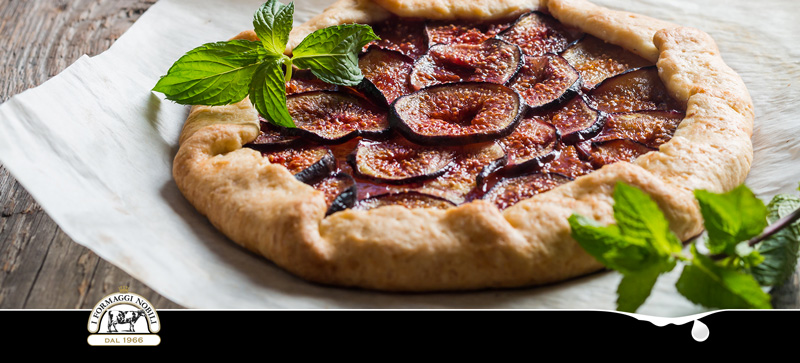
Ferragosto is just around the corner, and there’s nothing better than celebrating this day with excellent food to share with friends and family. That’s why we’ve come up with a special recipe that will earn you plenty of compliments while being simple and quick to prepare: a savory fig and ricotta tart. INGREDIENTS 1 sheet of puff pastry 250 g of ricotta 120 g of bacon 1 egg 300 g of ripe figs Salt to taste Pepper to taste PREPARATION In a large bowl, mix ricotta, egg, 70g of bacon, a pinch of salt, and a bit of pepper. Roll out the puff pastry in a baking dish lined with parchment paper and prick it with the tines of a fork. Create a border by folding the puff pastry all around. Pour the ricotta mixture onto the puff pastry and then bake everything in a fan oven at 180°C for 20 minutes. In the meantime, wash the figs and slice them. After the baking time, remove the tart from the oven and add the remaining bacon and figs on top. Finish baking in the oven for another 10 minutes, or until the pastry is golden brown. If you like, serve the tart with a drizzle of honey on top or as a side sauce. Are you ready to impress your guests? Then, we provide you with some other ideas for Ferragosto, such as zucchini and mozzarella meatballs.
Sandwich: 6 facts you might not know

A perfect dish for appetizers and birthdays, or for a quick lunch, but do you really know everything about the sandwich? Today we reveal 6 facts you might not have known. 1. First a sandwich, then a tramezzino Before becoming what it is today and adopting this name throughout Italy, the tramezzino was originally a sandwich. In the 1700s, John Montagu, the fourth Earl of Sandwich, during a card game, to avoid leaving the game, ordered one of his servants to bring him roast beef between two slices of soft bread buttered and crustless. The gesture was immediately copied by his fellow players, and thus, the habit of consuming sandwiches during other activities quickly spread throughout Europe, especially among the upper classes. 2. The tea sandwiches Its spread in Europe and evolution, however, is credited to the Duchess of Bedford, Anna Maria Stanhope, who in the 1800s, too hungry before dinner, decided to accompany the classic 5 o’clock tea with small sandwiches. White bread cut into triangles, with butter and cucumbers. By 1850, the practice had spread throughout England, with the addition of the first cold cuts and cheeses, becoming known as “tea sandwiches“. 3. The tramezzino appears in Italy But how did this dish arrive in Italy? It arrived in 1926 when Angela Demichelis Nebiolo, together with her husband, returned from America, bought the Caffè Mulassano, in Piazza Castello in Turin, bringing with them a toaster and starting to produce what was then a novelty: toast and tramezzini. The establishment was an immediate success, particularly these two dishes, which were simply called paninetto by the workers of Via Roma and Via Po. 4. Gabriele D’Annunzio coins the term tramezzino Gabriele D’Annunzio, attracted by this new delicacy, decided to try it. The response was positive, so much so that he felt it necessary to give it a new name, as sandwich seemed too un-Italian. Thus, since the dish is eaten between meals, in an interlude, the decision for the name fell on “tramezzino”. 5. The Venetian tramezzino It is in Venice that the tramezzino reaches its peak success. The trend spreads in all the chic bars of the center, and the dish is always paired with a glass of Spritz or wine. The tramezzino in Venice also undergoes an evolution as the filling is much more generous, placed in the center, while the edges are pressed. Finally, it has a greater softness, conferred by both the mayonnaise and the use of damp cloths. 6. The main fillings The most common fillings for tramezzini are: Ham and mushrooms Ham and artichokes Ham and cheese Mozzarella and tomato Tuna and eggs Tuna and onions Shrimp and cocktail sauce Chicken and lettuce
Stuffed Zucchini Flowers: The Recipe
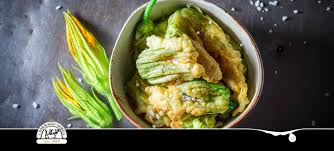
Zucchini flowers are a typical product of this season, so why not use them for a delicious and quick recipe? INGREDIENTS 20 zucchini flowers 350 g of ricotta cheese 20 small anchovies 1 egg 120 g grated Grana cheese Breadcrumbs as needed 200 g of all-purpose flour About 200 g of water Salt 1/2 teaspoon baking soda 1/2 liter of peanut oil PREPARATION Wash the zucchini flowers under running water and remove the pistil. Prepare the filling by combining ricotta, Grana cheese, an egg, and the anchovies cut into pieces. Mix everything to evenly distribute the ingredients. Fill the zucchini flowers with the mixture gently, so as not to damage them. For the batter, mix flour, baking soda, salt and gradually add the water until you get a semi-liquid mixture. At this point, dip the flowers one at a time, then place them on a plate. Once coated with batter, heat the oil in a deep pan, then immerse a few pieces at a time, cooking them for 30 seconds on each side. Place the fried flowers in a bowl, lined with paper towels.