Broccoli flan with mozzarella
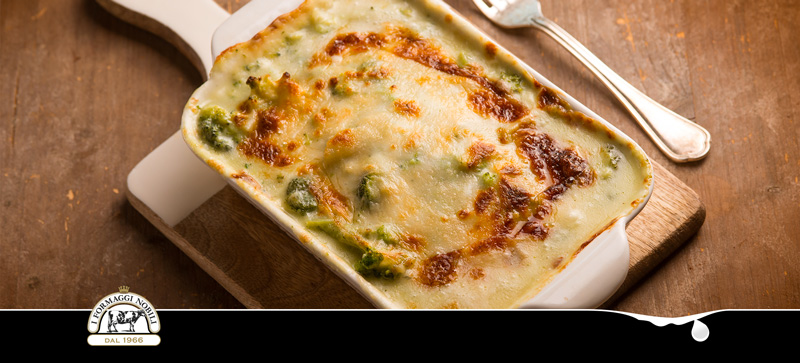
This flan is a delightful combination of broccoli and fiordilatte mozzarella, perfect for a nutritious and flavorful dinner. INGREDIENTS 400g of broccoli 250g of mozzarella, diced 3 eggs 100g grated Parmesan cheese Salt and pepper, to taste Nutmeg, a pinch Butter, as needed Breadcrumbs, as needed PREPARATION Clean the broccoli, divide them into florets and cook them in salted boiling water for about 5-7 minutes. They should remain al dente. Drain and let them cool. In a bowl, beat the eggs with salt, pepper, and nutmeg. Add the grated Parmesan and mix well. Take a baking dish, grease the bottom and sides with a bit of butter and sprinkle it with breadcrumbs. Place a layer of broccoli on the bottom, then add half of the diced mozzarella. Pour half of the egg and Parmesan mixture on top. Repeat the layers, finishing with the egg mixture. Preheat the oven to 180°C. Bake the flan and cook it for about 30 minutes, until it becomes golden on the surface. Let the flan rest for a few minutes before serving. This will make it easier to cut and better appreciate the flavors.
Cream of broccoli and peas with lemon mozzarella

Tired of the usual winter soups? Try the cream of broccoli, peas, and lemon mozzarella. INGREDIENTS 1 tablespoon of olive oil 1 medium onion, chopped 2 cloves of garlic, minced 1 bunch of broccoli, cleaned and cut into florets 200g of peas 1 medium potato 1 liter of vegetable broth Salt and pepper to taste 1 Bocconcino Grated zest of 1 lemon Fresh parsley, for garnish PREPARATION In a large pot, heat the olive oil over medium heat. Add the onion and garlic and sauté until they become translucent. Add the broccoli, peas, and potatoes (peeled and cubed). Stir well and cook for about 5 minutes, until the vegetables begin to soften slightly. Pour in the vegetable broth and bring to a boil. Then reduce the heat and simmer until the vegetables are tender. Using an immersion blender, blend the vegetables and broth until smooth. If necessary, add more broth to achieve the desired consistency. Season with salt and pepper to taste. Meanwhile, in a separate bowl, mix the cubes of fresh mozzarella with the grated lemon zest. Pour the hot soup into bowls and add some cubes of lemon mozzarella to the center of each serving. Garnish with chopped fresh parsley and a pinch of grated lemon zest for a touch of freshness.
Buffalo Mozzarella vs Cow’s Milk Mozzarella: Discover the Differences

Do you know the main differences between buffalo mozzarella and fiordilatte mozzarella? Today, Caseificio Nobili will reveal them all to you. Buffalo Mozzarella: Intense Flavor, Creamy Texture Buffalo mozzarella, with its ancient and authentic origin, offers a unique and unmistakable taste rooted in Italian dairy tradition. Made from buffalo milk, this mozzarella is distinguished by its slightly more intense and rich flavor, ranging from notes of fresh milk to hints of butter and cream. The soft and creamy texture, combined with its ability to melt in the mouth, makes buffalo mozzarella a sensory experience not to be missed. The trick is not to pair it with foods that overly contrast its flavor, as buffalo mozzarella already has a very full-bodied taste on its own. Cow’s Milk Mozzarella: Delicacy in Flavor and Texture Cow’s milk mozzarella, made with cow’s milk, enchants with its delicate sweetness and soft and velvety texture. Its slightly more delicate taste compared to buffalo mozzarella makes it a versatile choice suitable for various preparations, from dressing fresh salads to adding to hot dishes like pizza and pasta. Cow’s milk mozzarella stands out for its adaptability and ability to blend perfectly with other flavors, adding a touch of creaminess to every dish. Comparison: Flavor, Texture, and Culinary Use Although both mozzarella variants are appreciated for their unique characteristics, the comparison between buffalo mozzarella and cow’s milk mozzarella highlights interesting differences. While buffalo mozzarella is distinguished by its more intense flavor and its ability to be enjoyed on its own or with a simple dressing of oil and fresh basil, cow’s milk mozzarella perfectly adapts to a wide range of recipes, ensuring an enveloping creaminess without overpowering the other flavors in the dishes. Both variants are a symbol of Italian dairy mastery and can be appreciated in various gastronomic contexts.
Ricotta and Strawberry Mousse
The summer heat still makes us seek fresh and thirst-quenching foods, which is why today we offer you a sweet and light version to refresh your summer, a strawberry and ricotta mousse with a lively touch of limoncello. INGREDIENTS 200 ml of limoncello 300 g of ricotta 2 egg whites 10 g of gelatin sheets 150 g of powdered sugar 350 g of strawberries Salt to taste Mint to taste PREPARATION Start by cleaning the strawberries with cold water and removing the leaves. Then slice 300g and place them in a bowl to marinate in the fridge for an hour with 150 ml of limoncello and 20 g of powdered sugar. While waiting, soak the gelatin in cold water. In a bowl, combine and mix the ricotta, previously sifted with the remaining powdered sugar, and a bit of sauce created from the marinated strawberries. Sift everything again until you obtain a smooth and homogeneous cream. Now, in a saucepan, heat the remaining limoncello and add the squeezed gelatin until it dissolves. Once this process is complete, add the limoncello gelatin to the ricotta and let it cool. In a separate bowl, whip the egg whites until stiff with a pinch of salt, then fold them into the ricotta. Take the strawberries from the fridge and start creating, in deep glasses or cups (about 4 should result), a base with some strawberries, then place a good layer of mousse on top and let it set in the fridge for about an hour. Decorate the mousse with the remaining strawberries cut in half and a few mint leaves.
Sandwich: 6 facts you might not know

A perfect dish for appetizers and birthdays, or for a quick lunch, but do you really know everything about the sandwich? Today we reveal 6 facts you might not have known. 1. First a sandwich, then a tramezzino Before becoming what it is today and adopting this name throughout Italy, the tramezzino was originally a sandwich. In the 1700s, John Montagu, the fourth Earl of Sandwich, during a card game, to avoid leaving the game, ordered one of his servants to bring him roast beef between two slices of soft bread buttered and crustless. The gesture was immediately copied by his fellow players, and thus, the habit of consuming sandwiches during other activities quickly spread throughout Europe, especially among the upper classes. 2. The tea sandwiches Its spread in Europe and evolution, however, is credited to the Duchess of Bedford, Anna Maria Stanhope, who in the 1800s, too hungry before dinner, decided to accompany the classic 5 o’clock tea with small sandwiches. White bread cut into triangles, with butter and cucumbers. By 1850, the practice had spread throughout England, with the addition of the first cold cuts and cheeses, becoming known as “tea sandwiches“. 3. The tramezzino appears in Italy But how did this dish arrive in Italy? It arrived in 1926 when Angela Demichelis Nebiolo, together with her husband, returned from America, bought the Caffè Mulassano, in Piazza Castello in Turin, bringing with them a toaster and starting to produce what was then a novelty: toast and tramezzini. The establishment was an immediate success, particularly these two dishes, which were simply called paninetto by the workers of Via Roma and Via Po. 4. Gabriele D’Annunzio coins the term tramezzino Gabriele D’Annunzio, attracted by this new delicacy, decided to try it. The response was positive, so much so that he felt it necessary to give it a new name, as sandwich seemed too un-Italian. Thus, since the dish is eaten between meals, in an interlude, the decision for the name fell on “tramezzino”. 5. The Venetian tramezzino It is in Venice that the tramezzino reaches its peak success. The trend spreads in all the chic bars of the center, and the dish is always paired with a glass of Spritz or wine. The tramezzino in Venice also undergoes an evolution as the filling is much more generous, placed in the center, while the edges are pressed. Finally, it has a greater softness, conferred by both the mayonnaise and the use of damp cloths. 6. The main fillings The most common fillings for tramezzini are: Ham and mushrooms Ham and artichokes Ham and cheese Mozzarella and tomato Tuna and eggs Tuna and onions Shrimp and cocktail sauce Chicken and lettuce
Brussels Sprouts and Scamorza Casserole
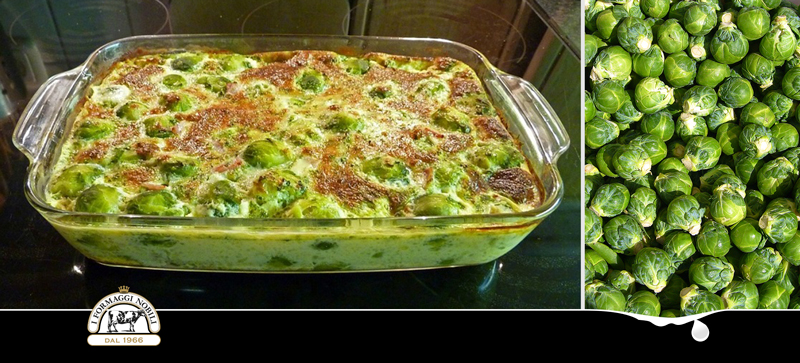
Don’t know how to get your children to eat Brussels sprouts? Try our new recipe for Brussels sprouts and scamorza casserole, it will not only be delicious but also healthy and made with seasonal products. INGREDIENTS 900 g of Brussels sprouts 350 g of potatoes 1 shallot 2 eggs 50 g of all-purpose flour 50 g of Nobili Butter 600 ml of milk 250 g of Nobili Scamorza 1 tablespoon of olive oil Salt to taste Pepper to taste PREPARATION The first thing to do is make the béchamel sauce. In a saucepan, melt the Nobili butter and then add the sifted flour. Stir the flour and butter for 5 minutes, trying to avoid lumps. Turn off the heat and gradually add the hot milk, stirring with a whisk. Then cook for another 15 minutes or so. Season with salt and pepper. Clean the Brussels sprouts and then steam them for 15 minutes. Meanwhile, sauté the shallot in a pan with a drizzle of oil and then add the peeled and diced potatoes. Cook for about ten minutes, adding a glass of water if necessary. Finally, add the Brussels sprouts and cook for another 2 minutes. At this point, the béchamel sauce will have cooled, so you can incorporate the eggs. Take a baking dish and alternate layers of béchamel, Brussels sprouts, and diced Nobili scamorza until you run out of ingredients. Finish with a sprinkle of cheese and bake in a preheated oven at 220°C for 20 minutes. Serve 5 minutes after baking.